Introduction
Puducherry has an interesting history and culture. The area has been influenced by many dynasties and European powers. In addition to this, there is some French architecture present in the area.
Interesting History
Puducherry has an interesting history. It has been influenced by civilizations such as the Ancient Romans and French colonial rule and has also gained independence. In this blog post, I will explore the culture of Puducherry. I will discuss ancient history, medieval history, French colonialism, independence, and its significance today.
Ancient History
Puducherry has a long history. Evidence found in archaeological sites has shown international trade to take place in this area. An important place within Puducherry’s history is Arikamedu, just south of Puducherry. Objects such as Roman coins, pottery, glassware, and other artifacts have been found at the site. This implies that there was contact with the Roman Empire.
Trading was important in this area. In the early periods of history, textiles, spices, pottery, and precious gemstones were traded. This shows that Puducherry was very important in maritime trade, even before European colonialism.
Throughout history, the area has been influenced by several South Indian dynasties. The Pallava, Chola, and Pandya dynasties have had a big impact on the religious, architectural, agricultural, and cultural aspects of the region. The name ‘Puducherry’ can be broken down into two parts. ‘Pudhu’ means ‘new,’ and ‘Cheri’ means ‘village’ in Tamil. So Puducherry means ‘New Village.’
Medieval History
Between the 4th and 14th centuries, Puducherry was influenced by many South Indian kingdoms. The Pallava and Chola Dynasties both had an influence on this region. The Pallava dynasty influenced religion, places of worship, and the culture of the Tamils.
However, later on, with the Chola Dynasty, there was significant cultural and economic growth in the area. This was due to increased trade, rule, and the development of places of worship. Before this region was taken over by the Sultanate of Bijapur, it had been influenced by the Pandya Dynasty and the Vijayanagara Empire.
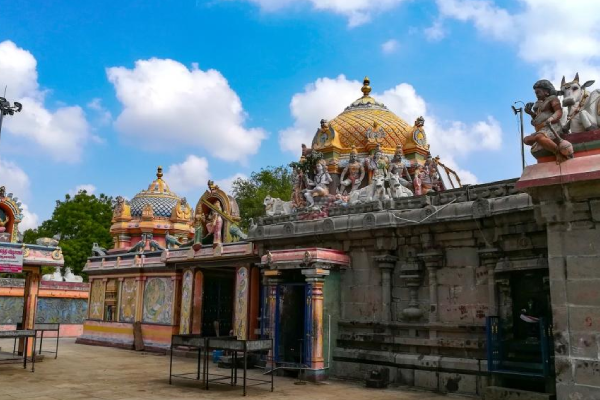
Today, there are many places of worship in Puducherry, meaning traditional culture is present. One of the most famous places of worship is the Manakula Vinayagar Temple. This temple is dedicated to Lord Ganesha. Due to its visually attractive architecture, religious events, and strong traditions, it is a popular pilgrimage location. The temple attracts many tourists throughout the year.
There are many places of worship and traditional villages in this area, demonstrating the rich culture in Southern India.
French Colonialism
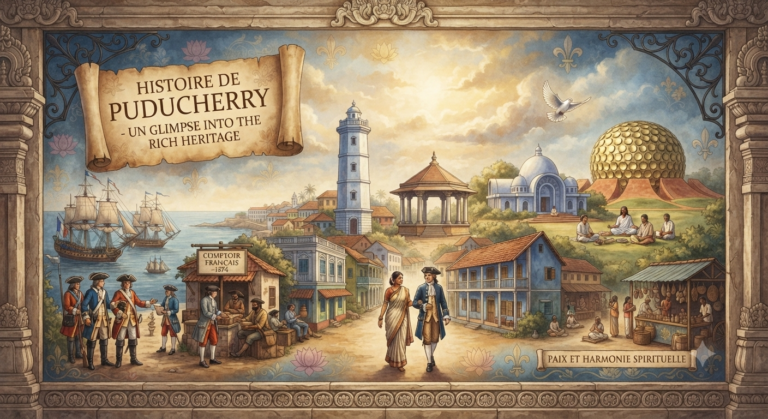
Puducherry became very influential during French colonialism. In the 16th century, Puducherry was trading with European countries, including Portugal, the Dutch, and the Danes.
In 1674, a French colony was set up by François Martin. During François Martin’s rule, Puducherry grew rapidly. It moved from being a small fishing area to becoming a significant trading port. Eventually, Puducherry became the main French colony in India.
Puducherry became an important area for French rule and trade in the 18 th century. Joseph François Dupleix (Governor) helped to increase the French influence in Southern India.
However, tensions grew between the British East India Company and the French. In 1693, Puducherry was taken under control by the Dutch. However, in 1699, it was returned to French rule. In 1761, Puducherry was taken over by British forces. Much damage was caused to the area. However, in 1765, Puducherry was returned to French rule under the Treaty of Paris.
Tensions continued to arise between the British and French in Puducherry. However, in 1816, French rule over Puducherry was secured.
During French colonial rule, Puducherry became very famous for its unique architecture. Within the French Quarter (White Town), there are many beautiful buildings. The buildings have vibrant colours and well-kept greenery. European-style architecture can be seen within the area. Puducherry has a very unique culture within this historic area.
Independence and Union Territory
During the independence of India, Puducherry saw many political changes. Despite India gaining independence in 1947, the French colonies in Puducherry remained under French rule.
Eventually, due to demands for independence and merging with independent India, agreements were made between the Indian government and the French government.
On 1st November 1954, Puducherry (Karaikal, Mahe, and Yanam) was granted de facto status in the Indian Union.
However, it was not until 16 th August 1962 that Puducherry was granted legal (de jure) status in the Indian Union. In 1963, Puducherry was made a union territory.
This means that colonial French rule has ended in this region, and a new era of development has begun in Puducherry.
Modern Puducherry
Since independence, Puducherry has become a popular place to visit. Due to the history, spiritualism, education, and tourism in the area, it has become very significant.
The Sri Aurobindo Ashram (set up in 1926) is very significant in Puducherry. The ashram was set up based on the teachings of Sri Aurobindo and the Mother. People from all over the world travel to this place to meditate, learn, and find inner peace.
One famous place to visit in Puducherry is Auroville. Set up in 1968, it was designed to be a universal city. People from all over the world and from different cultures live in harmony in this area.
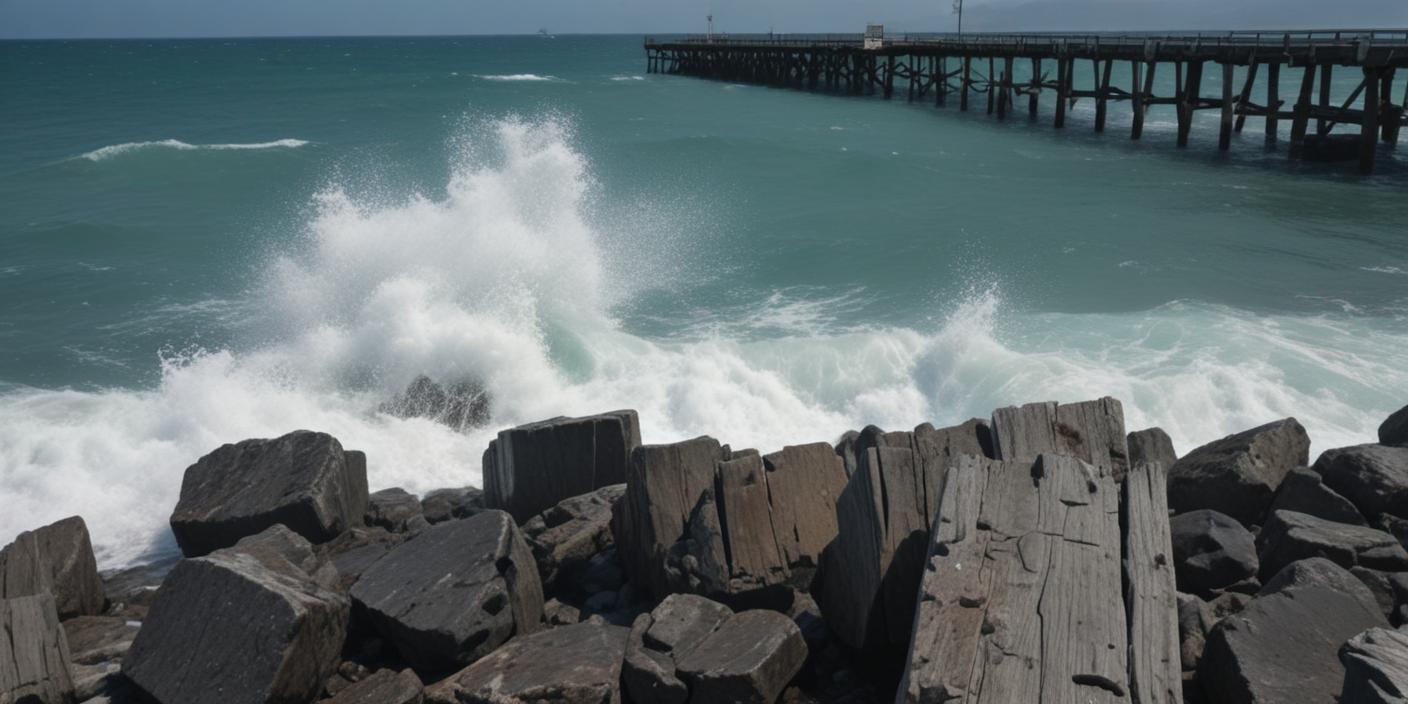
Puducherry is also famous for its beautiful coastal scenery. Promenade Beach, Paradise Beach, and Serenity Beach attract many visitors to come and relax in peaceful surroundings.
With new developments in places to stay, restaurants, cafes, and boutique hotels, Puducherry is very appealing to both domestic and international tourists.
Cultural Influence
Puducherry has a unique culture influenced by both Tamil and French culture. There are many festivals throughout the year in this area.
Pongal is a very culturally significant festival for the Tamil people. It is celebrated with great enthusiasm. Traditional foods are prepared, and houses are decorated in order to celebrate a good crop.
The 14th of July is Bastille Day and shows how closely linked Puducherry is with France. There are many features within Puducherry that show French influences. This includes architecture, food, language, and culture.
Every year, Puducherry holds a Heritage Festival to show the beautiful architecture in the area. Historical sites, traditional art, and culture are also displayed. This gives insight into the culture of Puducherry.
Puducherry is famous for traditional dishes, combining both Tamil and French influences. Many traditional southern Indian foods and local seafood dishes are available. In addition, French pastries and baked goods can be found. This shows that many different cultures have affected this area.
Conclusion
Puducherry is an amazing place to visit. With a rich history, culture, spiritual importance, and modern appeal, it has a unique background. It has been influenced by maritime trade with Ancient Rome, South Indian dynasties, and amazing French colonial history.
It is clear to see that Puducherry (Namma Puducherry) is very important. It has many different influences and a rich culture. It has become increasingly popular as a place to visit within Southern India.
Whether you are interested in history, spiritual tourism, or simply wish to relax within a peaceful coastal environment, Puducherry is a very welcoming place to visit. To gain a deeper insight into this amazing place, explore Puducherry and see its beautiful beaches, ancient places of worship, and cultural landmarks.