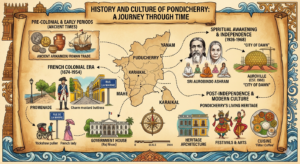
History and Culture of Pondicherry: A Journey Through Time
Introduction
Pondicherry, which is also known as Puducherry, is among India’s most fascinating coastal spots. The town is situated on the Bay of Bengal; this charming town is known due to its French colonial past, Tamil traditions, spiritual ambience, and breathtaking beauty. In contrast to the other Indian towns, Pondicherry stands out for its blending of European beauty along with South Indian culture, creating a city where history is alive every day.
From the earliest trade connections and regional dynasties through French colonisation and modern-day tourism, Pondicherry has evolved into an exciting cultural centre. The city’s architecture, streets, food, and lifestyle are an interesting journey through time.
The Historical Evolution of Pondicherry
Ancient Trade and Tamil Influence
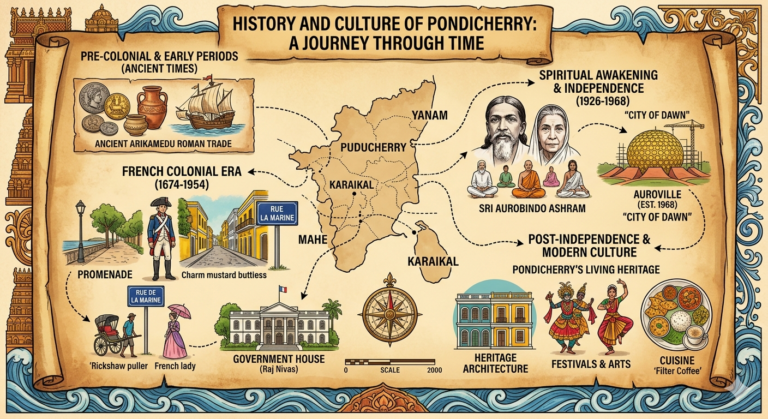
Before colonial rule, the area around Pondicherry was a bustling trading centre. The nearby archeological site of Arikamedu provides evidence of trading with the Roman world, suggesting that the area was a part of a trade network that was once global in nature.
French Colonial Era
The turning point of the history of Pondicherry came in 1674, when the French East India Company established the town as a settlement. Under the direction and leadership of Francois Martin, Pondicherry was transformed into a principal French base in India. The French introduced planned streets and colonial structures, including churches, as well as administrative systems, and many of them remain in use today. While this town was briefly occupied by both the Dutch and British in various wars, it remained in French control for more than three centuries.
Integration with India
- After India achieved independence at the end of 1947 Pondicherry was within French rule for a few years. It was officially joined in India between 1955 (de facto) and 1962 (de the law), becoming a Union Territory.
- In 2006 the name was altered from Pondicherry to Puducherry to reflect its Tamil roots, while also preserving its colonial heritage.
The Cultural Blend of Pondicherry
French and Tamil Fusion
What that makes Pondicherry distinctive is the unique cultural blend. It’s not only a French place in India but also a location in which French as well as Tamil traditions blend in harmony.
The blend can be seen in the following:
- Architecture
- Food
- Language
- Festivals
- Lifestyle
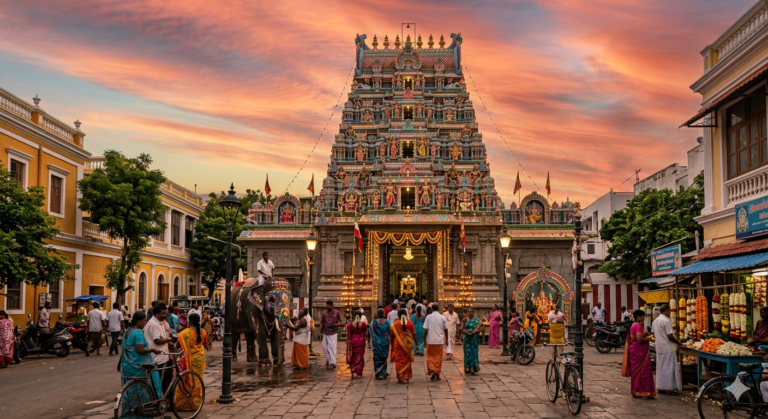
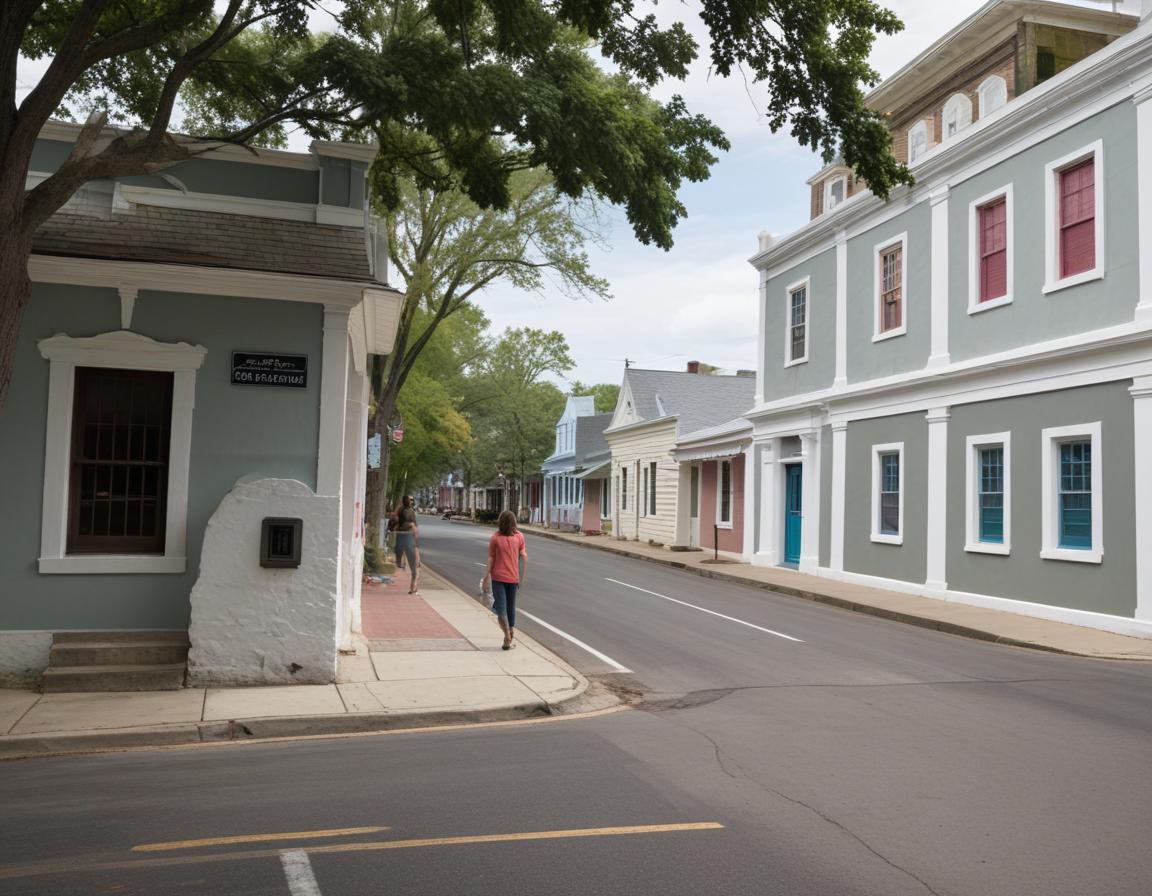
The well-known French Quarter (White Town) features colonial villas as well as pastel-coloured houses and tree-lined streets. The Tamil Quarter showcases traditional homes, temples, and local markets.
Spiritual and Cultural Significance
Pondicherry is also famous for its spiritual aspect. The Sri Aurobindo Ashram is a popular destination for those who seek peace and quiet. In close proximity, Auroville was founded in the year 1968. It represents a worldwide concept of sustainability and unity in living.
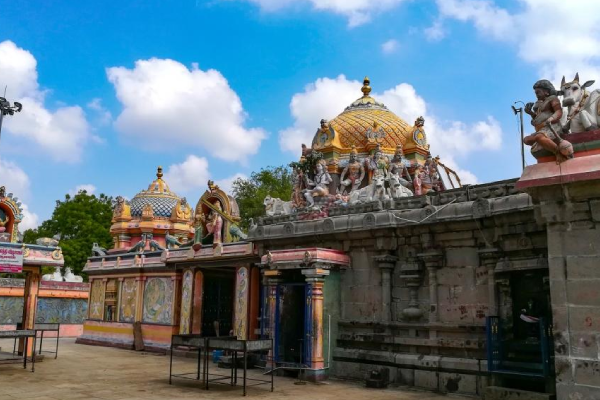
The town is where you can find churches, temples and mosques which reflect a harmonious mix of faiths and religions.
Cuisine and Lifestyle
Food culture in Pondicherry is a wonderful blend of Tamil and French influences. Tourists can relish:
- Traditional South Indian meals
- Fresh seafood
- French cakes and café culture
- Fusion dishes
The beachside lifestyle, the relaxed atmosphere, cafes and an artistic atmosphere make Pondicherry the top destination for those seeking the comforts and culture.
Why Is Pondicherry Famous for French Culture?
Pondicherry is renowned for its French culture since the city existed during French rule for over 300 years. The colonial period was a long-lasting influence on its architecture and education, language, and way of life.
Today, the existence of French-style architecture, streets, cafes, street names and establishments reflects this rich heritage. But the distinctiveness of Pondicherry is in the way it combines French influence with the strong Tamil traditions.
Pondicherry is renowned for its French culture because of its long colonial history as well as the conservation of the French style of living, architecture and customs along with Tamil culture.
What Makes Pondicherry Culturally Unique in India?
Pondicherry is unique due to the way that both eastern and western societies have been embraced by the community, giving rise to a distinctive blending of the following:
1. Tamil culture
2. French colonial history
3. Religious places of worship
4. Multiculturalism.
Through this combination or blending of different elements, every aspect of Pondicherry has retained an aspect of both antiquity and being globally current.
Conclusion
The culture and heritage of this city date back for thousands of years. The trade routes used by the Tamils led to Pondicherry developing significantly over time. The French arrived in this region in the 17th Century and created a lasting impact on Pondy, which has become an amazing, vibrant hub of culture today.
Whether you are a culturally inclined person, a person who loves history, or just someone looking for a place to escape from your day to day life and spend time in an enriching atmosphere, you will find Pondicherry a wonderful experience.
FAQs
- What is the reason Pondicherry historical significance?
Pondicherry is notable because of its trade links, Tamil heritage, and the long French colonial past.
- What year when did Pondicherry be incorporated into India?
It was admitted to India in the year 1954 (de in fact) and was recognized legally in.
- What was the reason Pondicherry changed to Puducherry?
The name Puducherry refers to its Tamil roots, meaning “new town.”
- What is Pondicherry is famous for?
It is renowned for French architecture beaches, spirituality, and the diversity of its culture.
- What is the French Quarter?
The French Quarter is a heritage zone with colonial architecture along with European street designs.
- Which languages can be spoken in Pondicherry?
Tamil is the most widely spoken language along with English, French, and other regional languages.
- What is Auroville is renowned for?
Auroville is famous for its efforts to promote the global community and sustainable living.
- Is Pondicherry an ideal tourist destination?
Yes, it’s a popular destination for its architecture, beaches, culture and peaceful surroundings.
- What does Pondicherry represent in terms of culture?
Pondicherry represents a unique mix of Tamil culture, French colonial influence, spiritual significance, architectural beauty and variety of cultures.
- Where can you find interesting historical locations in Pondicherry?
There are many historical locations to visit in Pondicherry, including the French quarter, Sri Aurobindo Ashram, Arikamedu, Basilica of the Sacred Heart of Jesus, and Aayi Mandapam.